Noritama Furikake
Contains fish/seafoodAlcohol-based seasoning
Japanese packet field guide
Furikake packet names can feature nori, egg, bonito, salmon, shiso, ume, wasabi, roe, kombu, or sesame—and many combine several. Use the Japanese words to shortlist a packet, then check its exact ingredients and allergens.
Furikake flavor names can center on nori, egg, bonito, salmon, shiso, ume, wasabi, cod roe, kombu, or sesame, but many packets combine several. Our 28-product database uses 15 broad editorial categories for navigation; these are not a legal or manufacturer-standard taxonomy. Use them to shortlist products, then check the exact ingredients and allergens.
Packet passport · source check 2026-07-14
Start with the large Japanese words on the front of a packet. These 12 entries come from our editorial flavor guide for navigating 28 product records, and each links to one representative official product source. Use them as likely flavor cues, then turn the packet over for the complete label.
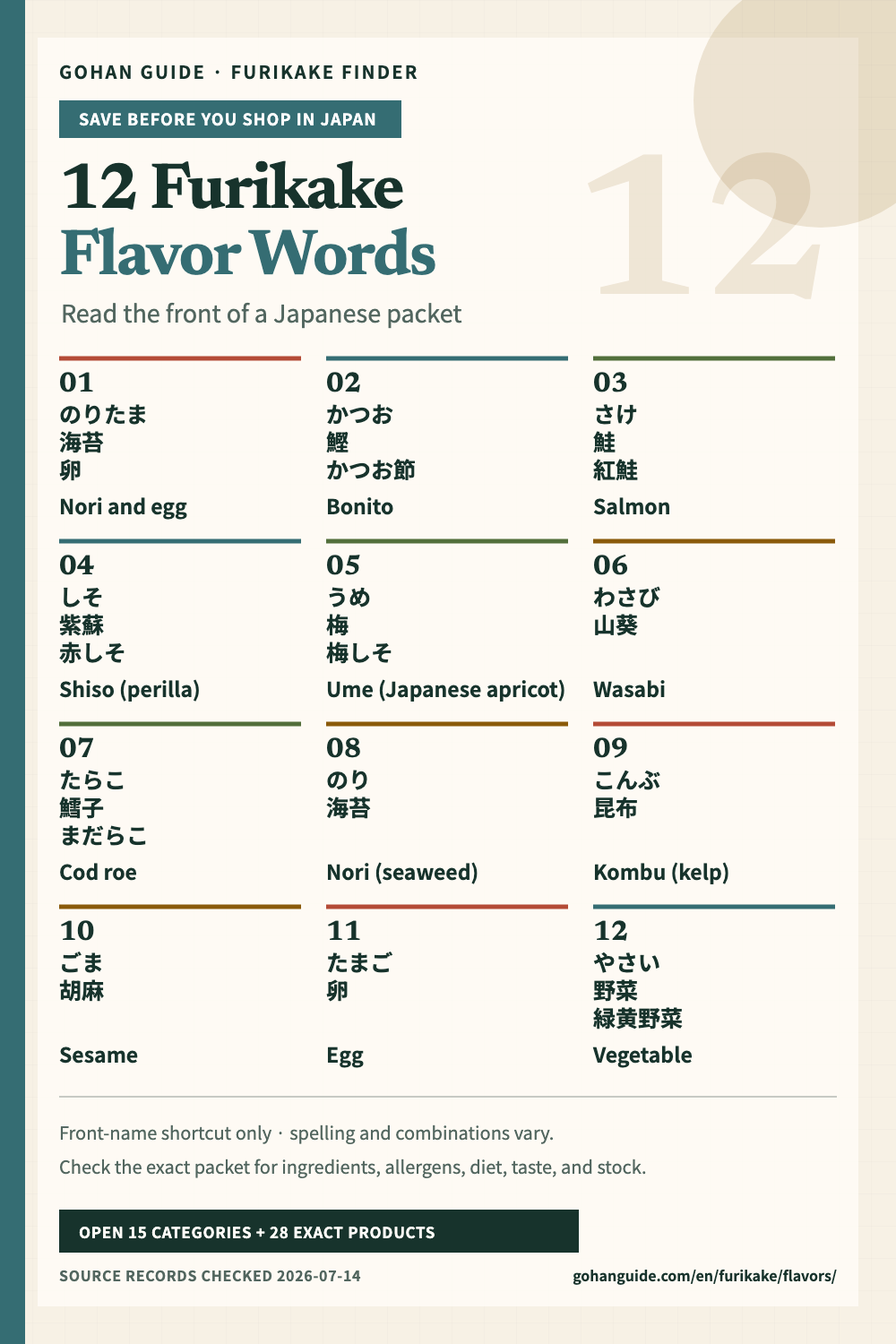
The Japanese column gives practical words to recognize, not a guarantee that every maker prints the same wording. Product counts describe this database, not sales, popularity, or Japanese market share.
On a narrow screen, swipe the table to compare all columns.
| Flavor category | Japanese packet words | What the words identify | Products checked | Examples | Browse |
|---|---|---|---|---|---|
| Nori & Egg (Noritama) | のりたま / 海苔 / 卵 | Noritama combines the packet ideas nori (seaweed) and tamago (egg). | 2 | Noritama FurikakeNoritamago Furikake | See category |
| Bonito (Katsuo) | かつお / 鰹 / かつお節 | Katsuo means bonito; katsuobushi means dried bonito flakes. | 3 | Papatto Furikake KatsuoAji Douraku Furikake | See category |
| Salmon (Sake) | さけ / 鮭 / 紅鮭 | Sake or shake can identify salmon, while benizake identifies sockeye salmon. | 2 | Soft Furikake SakeOtona no Furikake Benizake | See category |
| Shiso Leaf | しそ / 紫蘇 / 赤しそ / 青じそ | Shiso is perilla; packet names may distinguish red shiso from green shiso. | 2 | Kaori FurikakeYukari Furikake | See category |
| Plum (Ume) | うめ / 梅 / 梅しそ | Ume identifies Japanese apricot, commonly translated as Japanese plum; ume-shiso names a combination. | 2 | Mainichi Gokoku Ume Shiso FurikakeOtoko Ume Furikake | See category |
| Wasabi | わさび / 山葵 | Wasabi identifies the familiar Japanese plant or a wasabi-led seasoning direction. | 2 | Wasabi FurikakeOtona no Furikake Wasabi | See category |
| Cod Roe (Tarako) | たらこ / 鱈子 / まだらこ | Tarako identifies cod roe; the Akari product source specifically prints madarako (まだらこ). | 1 | Akari Furikake | See category |
| Seafood | 魚介 / 小魚 / いりこ / 魚粉 | Seafood is our umbrella for products led by small fish or several seafood ingredients rather than one named species. | 2 | Gohan no Tomo FurikakeAjiyose Furikake | See category |
| Seaweed (Nori) | のり / 海苔 | Nori identifies edible seaweed, often written in hiragana or with the characters 海苔. | 1 | Sarukani Gassen Stand Pack Furikake | See category |
| Kelp (Kombu) | こんぶ / 昆布 | Kombu identifies kelp; a packet may pair it with squid, sesame, fish, or other ingredients. | 1 | Ika Konbu Furikake | See category |
| Sesame (Goma) | ごま / 胡麻 | Goma identifies sesame, written most often as ごま and sometimes as 胡麻. | 2 | Goma Oshi Furikake Ume FuumiKyo Rayu Furikake — Kyoto Crunchy Hot Chili Oil Rice Seasoning | See category |
| Egg (Tamago) | たまご / 卵 | Tamago identifies egg and may appear as a named flavor inside an assorted pack. | 1 | Papatto Furikake Tamago | See category |
| Vegetable | やさい / 野菜 / 緑黄野菜 | Yasai identifies vegetables; ryokuō yasai refers to green and yellow vegetables. | 1 | Ryokuoyasai Furikake | See category |
| Assorted / Mixed Flavors | ミニパック / 旅行の友 | Mixed is our navigation bucket for the two current mini-packet assortments and the distinct Travel Companion record. | 3 | Pokemon Furikake Mini PackSoreike! Anpanman Furikake Mini Pack | See category |
| Other | 混ぜ込みわかめ / すきやき / ゆず胡椒 | Other holds distinct named directions that do not form a reliable shared ingredient category in this dataset. | 3 | Mazekomi Wakame FurikakeSukiyaki Furikake | See category |
Noritama combines the packet ideas nori (seaweed) and tamago (egg). The name does not tell you whether fish, dairy, meat, or other ingredients are also present.
2 products in this database · Source checks 2026-07-10
Katsuo means bonito; katsuobushi means dried bonito flakes. A bonito-led name does not describe every seasoning or allergen in the packet.
3 products in this database · Source checks 2026-07-10
Sake or shake can identify salmon, while benizake identifies sockeye salmon. The front name does not establish the amount of salmon or rule out other fish and animal ingredients.
2 products in this database · Source checks 2026-07-10
Shiso is perilla; packet names may distinguish red shiso from green shiso. A shiso category is not a plant-based or allergen-safety claim for the complete formula.
2 products in this database · Source checks 2026-07-10
Ume identifies Japanese apricot, commonly translated as Japanese plum; ume-shiso names a combination. The word does not establish sweetness, sourness, fish content, or dietary suitability.
2 products in this database · Source checks 2026-07-10
Wasabi identifies the familiar Japanese plant or a wasabi-led seasoning direction. The word does not measure heat and does not reveal all fish, egg, dairy, or soy ingredients.
2 products in this database · Source checks 2026-07-10
Tarako identifies cod roe; the Akari product source specifically prints madarako (まだらこ). Read the exact species and ingredient wording instead of treating every roe product as identical.
1 product in this database · Source checks 2026-07-10
Seafood is our umbrella for products led by small fish or several seafood ingredients rather than one named species. It is an editorial bucket, not a maker-standard flavor name or a complete allergen statement.
2 products in this database · Source checks 2026-07-10
Nori identifies edible seaweed, often written in hiragana or with the characters 海苔. A nori-led packet can still include bonito, shrimp, egg, dairy, sesame, or other ingredients.
1 product in this database · Source checks 2026-07-10
Kombu identifies kelp; a packet may pair it with squid, sesame, fish, or other ingredients. The category names the kelp direction only and does not establish the complete formula.
1 product in this database · Source checks 2026-07-10
Goma identifies sesame, written most often as ごま and sometimes as 胡麻. Sesame on the front does not rule out egg, wheat, soy, fish, chili, or other ingredients.
2 products in this database · Source checks 2026-07-10–2026-07-13
Tamago identifies egg and may appear as a named flavor inside an assorted pack. An egg-led name does not disclose the packet's fish, dairy, wheat, soy, or meat ingredients.
1 product in this database · Source checks 2026-07-10
Yasai identifies vegetables; ryokuō yasai refers to green and yellow vegetables. Vegetable branding does not mean the complete seasoning is vegetarian or free from fish, egg, or dairy.
1 product in this database · Source checks 2026-07-10
Mixed is our navigation bucket for the two current mini-packet assortments and the distinct Travel Companion record. It is not one flavor, and each inner packet or formula needs its own ingredient check.
3 products in this database · Source checks 2026-07-10
Other holds distinct named directions that do not form a reliable shared ingredient category in this dataset. It is a classification remainder, not a flavor; use the exact product name and ingredient panel.
3 products in this database · Source checks 2026-07-10
In this 28-product sample, Bonito (Katsuo) is the largest named ingredient category with 3 products. Mixed and Other also have three records each, but they are navigation buckets rather than single flavors. This is not Japanese market-share data.
It is a familiar nori-and-egg furikake direction: nori means seaweed and tamago means egg. The name does not define one fixed recipe, so check the exact packet for fish, dairy, meat, sesame, and other ingredients.
No. A nori, shiso, sesame, vegetable, or ume name can still sit on a multi-ingredient seasoning. Use the complete ingredient statement and allergen wording on the exact product.
Flavor categories point toward named ingredients or a product direction. Package format and use are separate questions—sprinkle-on versus mix-in, and dry versus soft. The complete furikake guide owns those format and use distinctions.