Furikake field guide
The Best Furikake for Salmon (From Our 28-Product Database)
Which furikake to use for furikake salmon or a salmon rice bowl, picked from our verified 28-product database by ingredients and maker uses, not a taste test.
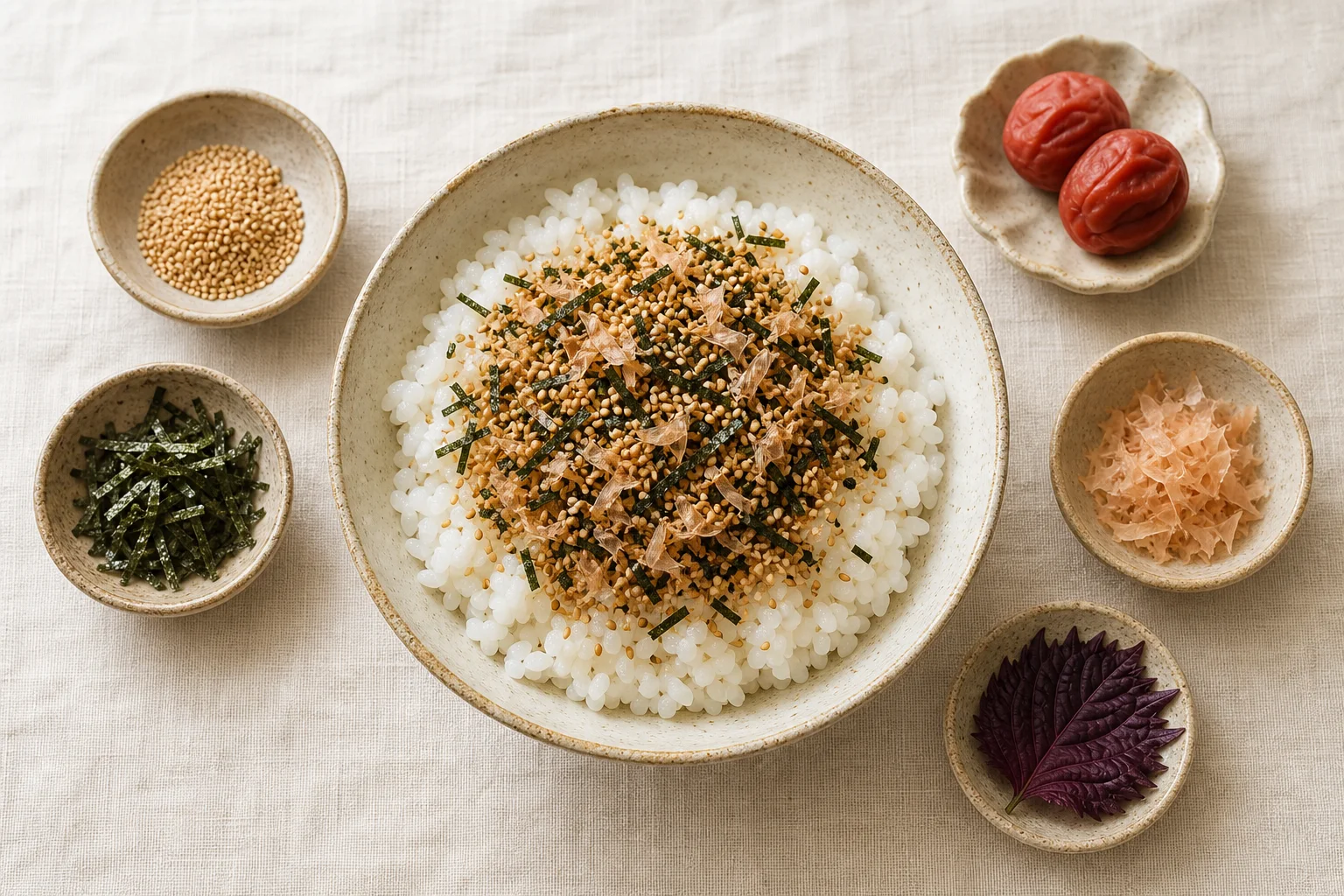
Furikake salmon—a baked or seared salmon fillet finished with mayonnaise, soy sauce, and furikake—is one of the most established furikake recipes in English-language food media, with Onolicious Hawaii and Plays Well With Butter treating it as a weeknight dish. We do not teach the recipe here. Instead, we compare five of our 28 verified products using official ingredients and, where available, a maker’s own fish-dish suggestion. We have not tasted these products, so this is not a flavor review.
What to Look For
Furikake salmon recipes consistently call for a nori-and-sesame style furikake: seaweed-forward, salty rather than sweet, without a strong competing flavor like egg or fruit. A large or resealable package also helps if you’re making the dish repeatedly rather than using a single-serving packet. With that in mind, here are five picks from our database, chosen for their ingredients rather than any claim about how they taste once cooked.
5 Picks From Our Database
1. Sarukani Gassen Stand Pack
Seasoned nori and sesame form the base of Yama Iso’s 110g pack; its maker description also names bonito, shrimp, and kombu. Of our five picks, those ingredients most closely match the nori-and-sesame pattern used by the cited recipes. Its moisture-resistant stand-up pouch also suits repeat use. It is ¥600 and sold through the maker’s own online shop; we have not cooked it on salmon.
2. Otona no Furikake, Sockeye Salmon
Nagatanien’s adult-oriented salmon furikake pairs sockeye salmon with crisp nori in the maker’s description. Using a salmon-flavored furikake on an actual salmon fillet reinforces rather than competes with the dish’s core ingredient. The Japanese pack contains four individually wrapped servings, 8.4g in total, with a ¥140 maker reference price. Nagatanien’s product page does not identify a product-specific retail channel, so check the current packet and retailer rather than planning around an assumed supermarket listing.
3. Soft Furikake, Salmon
Marumiya’s soft, moist salmon furikake is built primarily from salmon itself, simmered to a tender texture rather than the usual dry flake. It has no listed egg, dairy, meat, or alcohol-based ingredient — a simple, salmon-forward option for the same reason as the pick above. The 28g pack has a ¥140 maker reference price; its official product page does not document a store channel or live inventory.
4. Kaori
If you’d rather not double up on fish flavor, Kaori — Mishima’s green shiso furikake — is a clean, salty, fish-free option that Mishima itself recommends for tossed dishes and cold tofu. Its official ingredients list no fish, egg, dairy, or meat, making it one of our two plant-based candidates (candidate only — not a certified vegan product). At ¥130 for 13g, it’s also the least expensive pick on this list.
5. Kyo Rayu Furikake
Ochanokosaisai explicitly includes fish dishes in its suggested uses for Kyo Rayu. The label lists sesame, chili pepper, garlic, and Kujo green onion with no fish ingredient; that makes it a different route from the nori-and-seafood picks above. The maker describes mild heat, not a measured level. The 80g pouch is ¥648 including tax and lists egg, wheat, sesame, and soy as allergens. This is the most directly maker-documented fish-dish use in this list, but it is still not a pairing we tested.
What to Skip
Noritama, Japan’s best-known furikake, is a poor match for this specific use. Its official ingredients include processed egg product, dried mackerel flakes, and a matcha-salt mix balanced for plain rice — an already-sweet, egg-forward flavor that competes with, rather than complements, a rich salmon dish topped in mayo and soy sauce. It’s an excellent everyday furikake; it’s just not the one built for this job.
Common Questions
What kind of furikake is used for furikake salmon?
Most furikake salmon recipes call for a seaweed-and-sesame style furikake. Sarukani Gassen matches that named-ingredient pattern most closely in this shortlist, while the salmon-flavored Otona no Furikake reinforces the fish base. Kyo Rayu is the only pick here whose maker explicitly lists fish dishes among its uses. These are three different evidence types—recipe-pattern overlap, product flavor identity, and maker suggestion—not a taste-tested ranking.
Can I use noritama for salmon?
You can, but it’s not the ideal match. Noritama’s official ingredients include egg and dried mackerel flakes in an already sweet, savory blend designed for plain rice — a flavor combination that competes with, rather than complements, a rich salmon dish. A plainer, more seaweed-forward furikake works better for this specific use.
For the step-by-step recipe itself, see Onolicious Hawaii’s furikake salmon or Plays Well With Butter’s version. To browse every product’s full ingredient list, visit our product database, and for our general-purpose usage guide, see How to Use Furikake: 15 Ways Beyond Rice.
Sources & methodology
Method: Claims on this page are checked against the named official or primary sources below, using the limitations described in Gohan Guide's verification method.
- Onolicious Hawaii — Furikake Salmon Recipe
- Plays Well With Butter — Furikake Salmon Recipe
- Yama Iso Official Shop — Sarukani Gassen Stand Pack
- Nagatanien — Otona no Furikake Sockeye Salmon
- Marumiya — Soft Furikake Salmon
- Mishima Foods — Kaori
- Ochanokosaisai — Kyo Rayu Furikake (Japanese Product Page)
- Ochanokosaisai — Kyoto Crunchy Hot Chili Oil Rice Seasoning
- Marumiya — Noritama