Furikake field guide
The Best Furikake for Onigiri (Mix-In vs. Sprinkle-On)
Mix-in (mazekomi) furikake vs. sprinkle-on furikake for onigiri, explained, with picks from our current product database for each style.
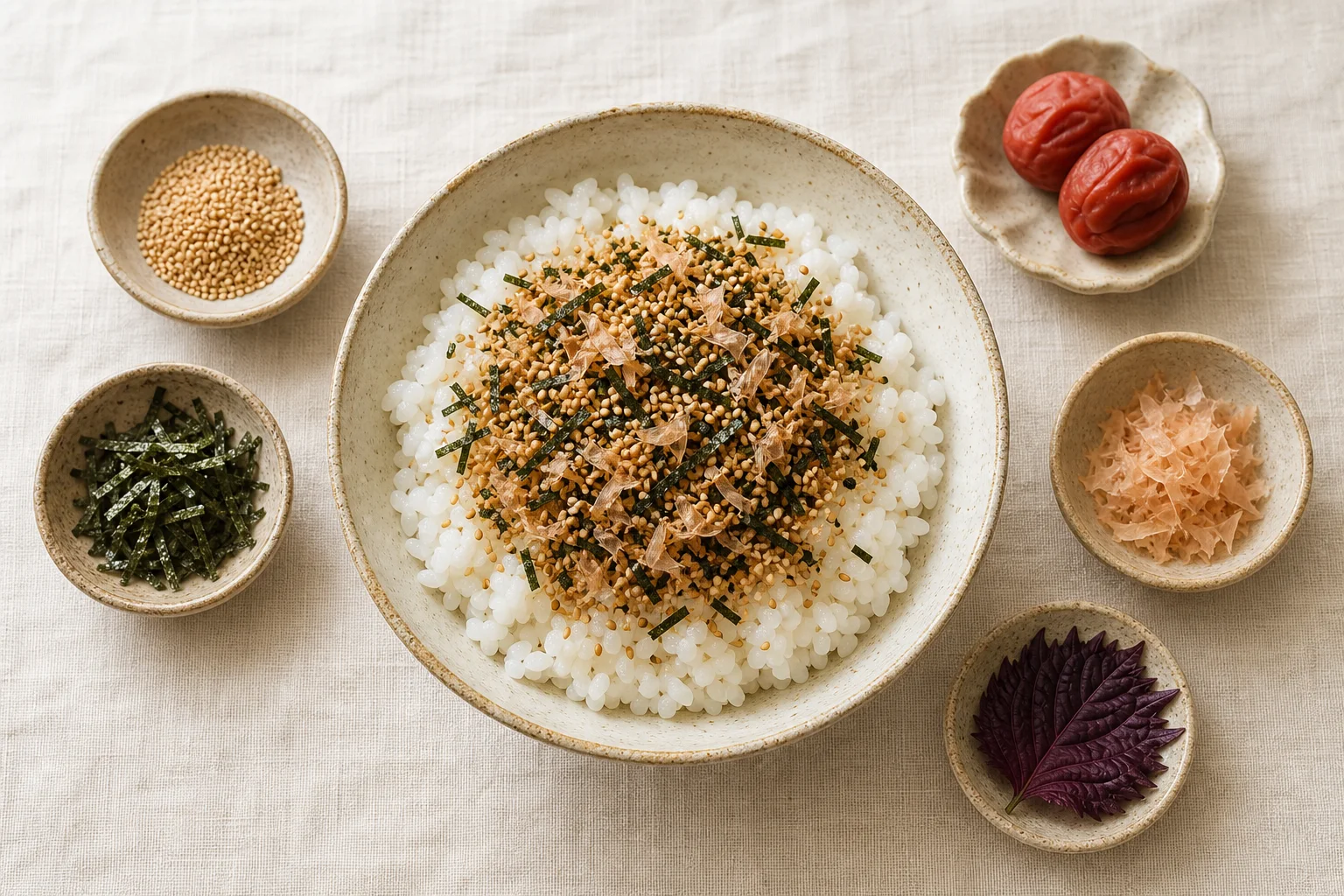
Onigiri—hand-shaped or molded rice balls, often wrapped in nori—are a fixture of Japanese convenience stores and bento boxes. Furikake for onigiri splits into two distinct product styles on Japanese shelves: mazekomi (mix-in) furikake, designed to be stirred into the rice before shaping, and ordinary sprinkle-on furikake, added to the outside. This guide explains the difference and points to products from our 28-item database for each style, based on manufacturer descriptions and official ingredients. We have not tasted these products, and Just One Cookbook’s onigiri guide already covers shaping technique.
What Is Mazekomi Furikake?
Mazekomi (混ぜ込み, literally “mixed in”) furikake is a distinct product category in Japan, packaged and marketed specifically to be stirred through cooked rice rather than sprinkled over the top. Manufacturers typically describe it as moister and less crunchy than sprinkle-on furikake, so the flavor distributes evenly through every bite of a shaped onigiri instead of sitting only on the surface.
Why the Split Exists
The practical logic is about where the flavor ends up. A sprinkle-on furikake sits on the outside of a shaped onigiri, which is fine for a rice ball you’re eating right away, but the coating can shed or turn soggy if the onigiri sits wrapped for a few hours — a real concern for a bento box assembled in the morning and eaten at lunch. A mix-in furikake avoids that problem entirely, since the seasoning is already distributed through the rice itself before shaping. Neither style is objectively better; they solve different jobs.
Mix-In Picks
Mazekomi Wakame
This is the clearest example in our database: Marumiya’s product is literally named “mix-in wakame,” made from seasoned wakame seaweed with no listed fish, meat, egg, or dairy ingredient. Its official usage suggestions include rice, onigiri, and bento specifically. The 29g pack has a ¥151 maker reference price; the official product page does not document a store channel.
Yukari
Yukari isn’t packaged as a “mazekomi” product by name, but Mishima’s product page tells shoppers to mix it into rice. It therefore serves the same practical job without using the category name on the pack. Made from contract-grown red shiso with no listed fish, egg, dairy, or meat ingredient, it’s one of our two plant-based candidates (candidate only, not certified). It’s ¥275 for 46g.
Sprinkle-On Picks for Onigiri
Most furikake in our database — and on Japanese shelves generally — is the traditional sprinkle-on type. A few products explicitly list onigiri among their manufacturer-suggested uses:
- Ryokou no Tomo — Tanaka Foods’ small-fish-and-egg furikake lists steamed rice, onigiri, and bento as official uses. The 18g pack has a ¥140 maker reference price; Hiroshima City lists grocery, retail, convenience, and drug stores as general channels, with branch stock unconfirmed.
- Goma Oshi Furikake, Plum — A sesame-and-plum furikake with no listed fish, egg, meat, or seafood ingredient; Hamaotome’s own usage suggestions include both rice and onigiri specifically. ¥120 for 27g.
- Kyo Rayu Furikake — Ochanokosaisai explicitly suggests onigiri for this 80g sesame, chili, garlic, and Kujo-green-onion pouch. The maker describes mild heat; its label lists egg, wheat, sesame, and soy.
Beyond these manufacturer-confirmed picks, any dry, sprinkle-on furikake in our product database can be used the same way — sprinkled over the rice before or after shaping.
For Kids’ Bento Boxes
If you’re packing onigiri for a child’s lunch, individually wrapped mini packets solve a real logistical problem: no shared jar, no clumping in a shared container. Two character-licensed assortments in our database are built for exactly this — Pokémon Furikake Mini Packs (20 packets, four flavors) and Anpanman Furikake Mini Packs (also 20 packets, four flavors). Both are sprinkle-on style, not mix-in.
Common Questions
What does “mazekomi” mean on a furikake package?
Mazekomi (混ぜ込み) means “mixed in.” It’s a furikake product category in Japan designed to be stirred directly into cooked rice before shaping onigiri or serving, rather than sprinkled over the top afterward. Mazekomi furikake tends to be moister and less crunchy than standard sprinkle-on furikake, since it’s meant to distribute through every bite.
Which furikake is good for kids’ onigiri?
For portioning convenience, individually wrapped character packs like Pokémon Furikake Mini Packs or Anpanman Furikake Mini Packs avoid a shared jar spilling in a lunch bag. Both assortments contain several formulas, so read the exact box rather than treating the character design as an ingredient or allergy shortcut.
Can I use a sprinkle-on furikake as a mix-in instead?
You can, but the result is different from a purpose-built mazekomi product. A dry, sprinkle-on furikake mixed into rice will still flavor it, but manufacturers formulate mazekomi products with a moister texture specifically so they blend evenly rather than clumping. If you only have a sprinkle-on furikake on hand, mixing in a smaller amount than you’d use on top tends to work better than a full sprinkle-sized portion.
For the actual shaping technique, see Just One Cookbook’s onigiri guide. To browse all 28 products by flavor and ingredients, visit our product database, or start with How to Use Furikake: 15 Ways Beyond Rice.
Sources & methodology
Method: Claims on this page are checked against the named official or primary sources below, using the limitations described in Gohan Guide's verification method.